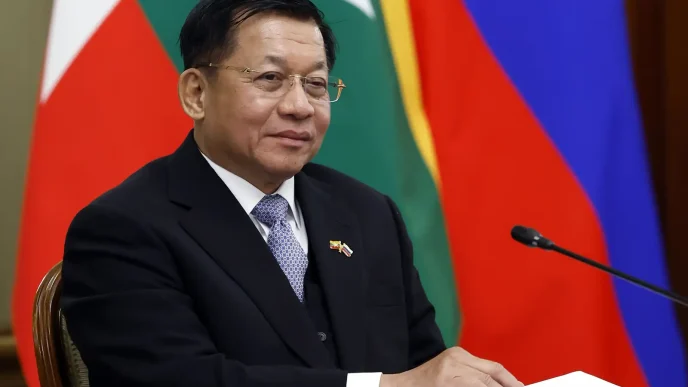





Prime Minister Anwar Ibrahim’s three-day official visit to Japan comes at a pivotal moment in international affairs.
While Malaysia and Japan have enjoyed close relations for decades, the significance of this visit lies in its broader strategic context.
It demonstrates how the Comprehensive Strategic Partnership (CSP), established in December 2023, is evolving into a more substantive framework capable of addressing the challenges of an increasingly uncertain world.
The partnership between Malaysia and Japan has never stood still.
For much of the post-war period, it was anchored in trade, investment, industrialisation, and human capital development.
Japanese corporations were among the first foreign investors to place their confidence in Malaysia’s economic future.
Their investments helped transform Malaysia into one of Southeast Asia’s most successful manufacturing economies.
Entire industrial ecosystems emerged around Japanese participation in electronics, automotive production, engineering, and advanced manufacturing.
More importantly, Japan transferred technology, managerial expertise, industrial discipline, and technical skills that contributed significantly to Malaysia’s economic modernisation.
Today, however, the relationship is entering a different phase.
The world confronting Malaysia and Japan is considerably more complex than the one that existed when the CSP was announced in 2023.
Wars in Europe and West Asia continue to generate uncertainty in global energy markets.
Supply chains remain vulnerable to geopolitical disruptions. Artificial intelligence is transforming industries and labour markets at unprecedented speed.
Competition over semiconductors, advanced computing, critical minerals, and digital infrastructure is becoming increasingly intense.
For middle-size powers such as Malaysia and Japan, adapting to these changes is no longer optional.
It is essential.
This explains why Anwar’s visit focused heavily on future-oriented sectors that will shape the next phase of bilateral cooperation.
These sectors include artificial intelligence, advanced computing, semiconductors, renewable energy, hydrogen technologies, digital infrastructure, and scientific research.
They represent the new frontiers of the Malaysia-Japan relationship.
Malaysia is seeking to move beyond its traditional role as a manufacturing hub and become a centre for innovation, technological development, and digital transformation.
Japan remains one of the world’s foremost technological powers and is uniquely positioned to support Malaysia’s next stage of economic development.
In many respects, Japan helped Malaysia achieve its first industrial transformation.
The current challenge is whether both countries can work together to realise Malaysia’s second transformation — one driven by knowledge, technology, innovation, and advanced research.
One of the most significant developments arising from the visit is the growing emphasis on educational and scientific cooperation.
The prime minister’s engagement with the University of Tokyo highlighted the increasingly important role of knowledge diplomacy in bilateral relations.
The planned collaboration between the university’s Research Centre for Advanced Science and Technology (RCAST) and the International Islamic University Malaysia reflects a recognition that future competitiveness depends upon the ability to generate new knowledge and develop cutting-edge technologies.
Research institutions are becoming as strategically important as industrial parks.
Universities are becoming engines of innovation and economic growth.
Countries that fail to invest in research and development risk falling behind in an increasingly knowledge-driven global economy.
Malaysia’s cooperation with leading Japanese institutions therefore carries significance that extends well beyond academia.
Anwar’s meetings with executives from IBM Japan, Mitsubishi Corporation, Eneos Corporation, Shizen Energy, Denso Corporation, and Marubeni Corporation further illustrate the widening spectrum of cooperation.
These discussions were not limited to conventional investment promotion.
Rather, they focused on strategic sectors that are becoming increasingly important to both countries.
Artificial intelligence and advanced computing are becoming central to economic competitiveness.
Renewable energy and hydrogen technologies are becoming vital to long-term sustainability.
Digital infrastructure is becoming as important as physical infrastructure.
Even the halal economy is emerging as an area where Malaysia and Japan can jointly develop new opportunities across Asia and beyond.
The growing emphasis on energy cooperation is particularly timely.
The continuing instability in West Asia serves as a reminder that no trading nation is insulated from geopolitical shocks.
Malaysia may be geographically distant from the conflict zone, yet fluctuations in energy prices, shipping costs, and supply chain reliability inevitably affect the country’s economic outlook.
Japan faces similar vulnerabilities.
As one of the world’s largest importers of energy resources, Tokyo has spent decades developing expertise in energy efficiency, diversification, hydrogen technologies, renewable energy systems, and industrial resilience.
These are areas where cooperation with Malaysia is likely to deepen considerably in the years ahead.
Importantly, the enhancement of the CSP should not be interpreted through a zero-sum lens.
Malaysia continues to enjoy strong economic relations with China, which remains its largest trading partner.
It likewise maintains productive engagement with the United States, Europe, South Korea, India, and other key partners.
Japan itself continues to engage major economies across the world.
The purpose of the CSP is therefore not exclusion.
Rather, it is resilience.
It is about ensuring that Malaysia and Japan possess the technological capabilities, economic adaptability, and institutional partnerships necessary to navigate a more uncertain international environment.
This approach is entirely consistent with Asean’s longstanding commitment to inclusivity, strategic equilibrium, and constructive engagement with all major powers.
The true significance of Anwar’s three-day official visit lies in the message it sends.
The CSP established in 2023 is no longer simply a diplomatic designation.
It is becoming an increasingly dynamic framework through which Malaysia and Japan can collaborate in addressing the defining challenges of the 21st century.
What was once a partnership centred on industrialisation is expanding into one focused on innovation.
What was once driven primarily by manufacturing is now embracing artificial intelligence, advanced technologies, scientific research, and energy transition.
And what was once largely economic is becoming simultaneously economic, technological, educational, and strategic.
In short, Malaysia’s comprehensive strategic partnership with Japan is being enhanced with greater depth and broader spectrum.
In an era marked by geopolitical uncertainty and technological transformation, such an evolution is not merely desirable. It is indispensable.
The views expressed are those of the writer and do not necessarily reflect those of FMT.